

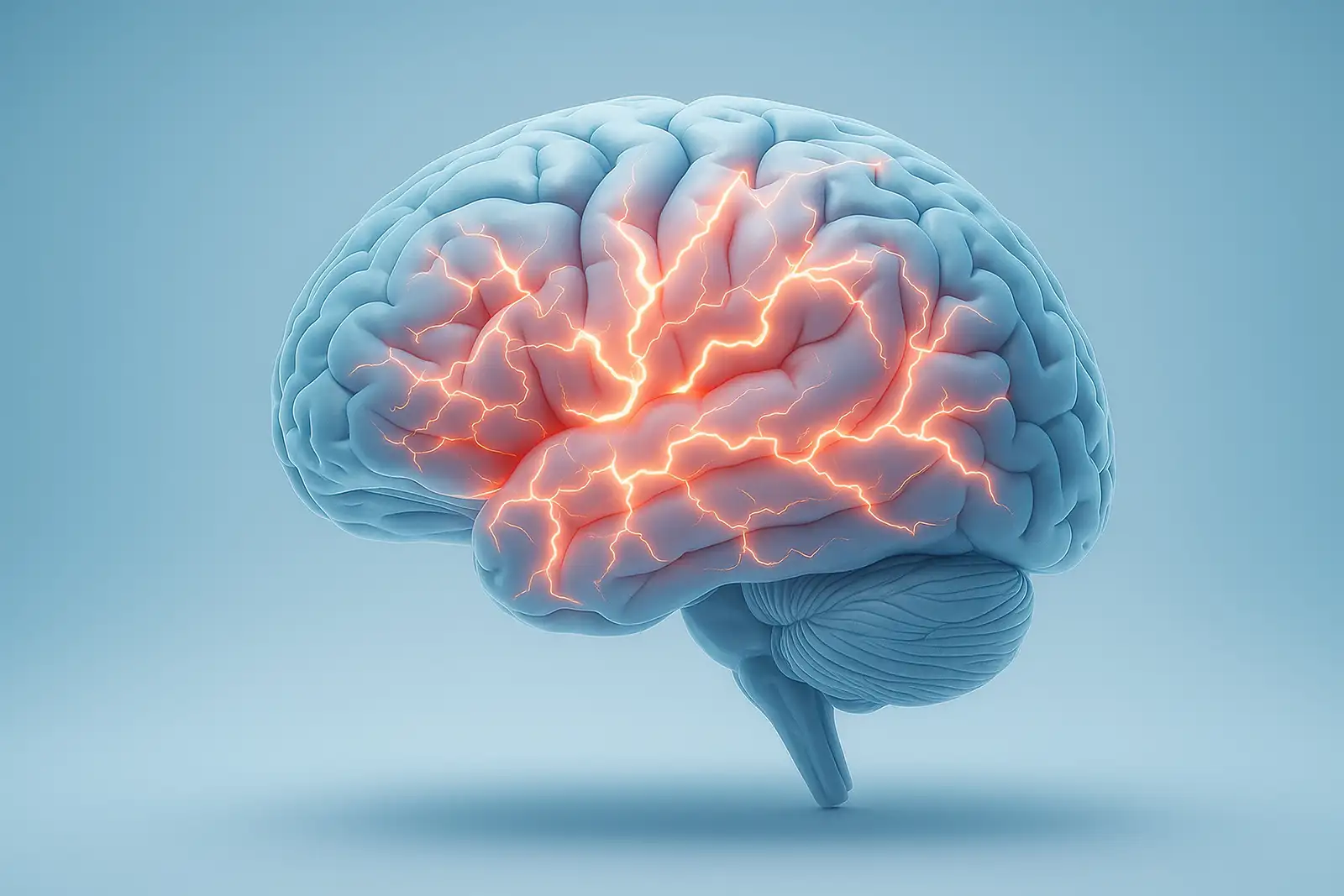
Epilepsy is a neurological condition in which a person has a tendency to experience recurrent, unprovoked seizures. A seizure happens when a sudden burst of abnormal electrical activity in the brain briefly disrupts how the brain works.1
Epilepsy is not a single condition. It affects each person differently, depending on the type of seizure and the underlying cause. With the right diagnosis and treatment, many people with epilepsy gain good seizure control and lead full, active lives.1 Most seizures stop on their own. Some do not, and when a seizure goes on too long, every minute matters. Being Seizure Ready means that the people around someone with epilepsy know the signs, have a plan in place and can act calmly.1
Is a seizure happening right now?
- Time it. Note when the seizure started and stay with the person.1
- STAY | SAFE | SIDE Stay calm, move dangerous objects away, cushion the head and turn the person on their side.1
- Call 10177 from a landline or 112 from any cell phone if the seizure lasts 5 minutes or longer, or if another seizure starts before the person recovers.1,2
- Rescue medicine may only be given if it has been prescribed for this person and you have been trained to give it.1
KNOW: Understanding seizures
Seizures are grouped according to where they begin in the brain and how they affect a person.1,3
Focal seizures
Focal seizures begin in one area of the brain. The person may stay aware or have reduced awareness. You might see:1
- Jerking or stiffness in one part of the body
- Unusual smells, tastes or sensations, or a rising feeling in the stomach
- Confusion or repeated movements such as lip-smacking
- Wandering or behaving strangely
Generalised seizures
Generalised seizures involve both sides of the brain and usually affect awareness and the whole body. They include:1,3
- Tonic-clonic: stiffening, then jerking, often with a fall
- Absence: a brief, blank stare
- Myoclonic: sudden jerks
- Atonic: a sudden loss of muscle tone and a fall
In some cases a seizure cannot yet be clearly classified. A healthcare professional will assess the seizure type over time and guide treatment.1
When does a seizure become an emergency?
A seizure that lasts 5 minutes or longer, or repeated seizures without recovery in between, is called status epilepticus. Some people also experience seizure clusters, where several seizures occur close together.1,2
A prolonged convulsive seizure is a medical emergency. The sooner treatment starts, the better the outcome.1,2
PLAN: Your Emergency Seizure Action Plan
An Emergency Seizure Action Plan is a personalised, written plan that tells the people around someone with epilepsy exactly what to do. It is created with the prescribing healthcare professional and should be followed as written.1 A good plan covers:
- What this person’s seizures usually look like
- When to act, including how long to wait before giving rescue medicine or calling for help
- Whether a rescue medicine has been prescribed, and if so, which one, how and when it is given
- Who has been trained to give it, such as family members, caregivers or school staff
- When to call for emergency help, and who to contact
Be Seizure Ready – Download an Emergency Seizure Action Plan, complete it with your doctor, and share it with everyone who may need it.
Rescue medicine
Some people with epilepsy are at risk of prolonged seizures or seizure clusters. For them, a healthcare professional may prescribe an emergency medicine, also called a rescue medicine, to help stop a seizure quickly, often outside hospital. The rescue medicines most commonly used belong to a group called benzodiazepines.1,2 Depending on what has been prescribed, they may be given:1
- As a spray into the nose (intranasal)
- Into the side of the mouth, between the cheek and gum (buccal)
- Rectally
- By injection, in a hospital setting
A rescue medicine is always part of an individual seizure management plan. The choice of medicine, how it is given and when to use it are decided by the prescribing healthcare professional. Anyone who may need to give it should be trained and should follow the written plan.1,2 Keep rescue medicine in a safe place, out of reach of children, and check the expiry date regularly.1
Questions to ask your doctor
- Do I, or does the person I care for, need a rescue medicine?
- What should I do if a seizure lasts longer than 5 minutes?
- Can my caregiver, family or school be trained to help?
- Can we write a seizure action plan together?
ACT: What to do during a seizure
Stay calm and focus on safety. Most seizures stop on their own. If you see someone having a seizure, follow three simple steps:1
STAY
- Stay with the person and remain calm. Note the time the seizure starts so you can time how long it lasts.
- Keep them company until they are fully awake and aware. Look for a medical bracelet, card or other identification.
SAFE
- Move away anything hard or sharp and cushion their head with something soft.
- Loosen anything tight around the neck. Do not move them unless they are in danger.
SIDE
- Once the active jerking has settled, or if they are not awake and aware, place them in the recovery position to help keep the airway clear.
- Stay with them until they have fully recovered.
Do not
- Hold the person down or try to stop their movements
- Put anything in their mouth; a person cannot swallow their tongue
- Give food, drink or oral medicine during the seizure
- Give rescue medicine unless it has been prescribed and you have been trained
After the seizure
The person may feel confused, tired or emotional, and may not remember the seizure. Offer reassurance, let them rest and keep them comfortable. Do not give them anything to eat or drink until they are fully alert. Some people recover quickly; others take longer to feel themselves again.1
Call for emergency help if:
- The seizure lasts 5 minutes or longer
- One seizure follows another without recovery in between
- The person has difficulty breathing, or does not wake up or regain awareness
- The person is injured, pregnant or unwell, or the seizure happens in water
- It is the person’s first-ever seizure, or you are worried for any reason
Call 10177 from a landline or 112 from any cellphone.1
For more information, speak to a healthcare professional or visit Epilepsy South Africa at www.epilepsy.org.za.
References
- Epilepsy South Africa. (2026). Epilepsy and emergency seizure management: A guide for persons with epilepsy, their families and caregivers. Epilepsy South Africa. https://www.epilepsy.org.za
- National Department of Health, South Africa. (2025). Standard treatment guidelines and essential medicines list for South Africa: Primary healthcare level (2020 ed., Version 1.0, 26 May 2025). Chapter 15: Central nervous system conditions.
- Fisher, R. S., Cross, J. H., French, J. A., et al. (2017). Operational classification of seizure types by the International League Against Epilepsy: Position paper of the ILAE Commission for Classification and Terminology. Epilepsia, 58(4), 522–530.
- World Health Organization. (2019). Epilepsy: A public health imperative. World Health Organization.
